

Last updated October 31, 2026
 Home additions & ADU
 Kitchen remodeling
 Bathroom remodeling
 Roofing
 Windows & doors
 Driveway & pavers
 Fence
Free written scope consultation - allowances, timeline, and change-order rules on paper before a single trade is scheduled
General Contractor Maintenance Checklist for Daly City Homeowners
The fog that rolls in off the Pacific every summer morning isn’t just atmosphere. It deposits salt-laden moisture on your fascia boards, window frames, and roof flashing in a slow, invisible process that most homeowners don’t notice until the rot is structural. In Daly City, we deal with a maintenance profile unlike almost anywhere else in the Bay Area: consistent humidity without the heavy rainfall, persistent salt exposure without the surf-front property prices, and hillside soil that expands and contracts through the winter months. This guide maps the maintenance tasks that actually matter here, when to do them, and what sequence catches the most expensive failures before they start.
Quick Answer
Daly City homeowners should run a seasonal maintenance sweep focused on four things the marine layer attacks hardest: roof penetrations and flashing, window and door seals (especially west-facing exposures), siding and trim, and drainage around the foundation and hillside retaining walls. Most problems take 3 to 5 years to become visible but less than 12 months to become expensive. A general contractor’s annual walkthrough catches these at the interaction points, where roof meets siding meets flashing, before individual component failures cascade.
Styles & brands we work with
Table of Contents
- Roof and Flashing Maintenance in Daly City
- Window and Door Seal Inspection for Coastal Exposure
- Siding, Trim, and Paint: What the Salt Air Does First
- Fencing and Hardscaping on Hillside Lots
- Drainage, Foundation, and Soil Movement
- Interior Systems: Kitchen, Bath, and Unseen Intrusions
- Documentation and Permit History for Resale
- A Seasonal Maintenance Calendar for Daly City
Roof and Flashing Maintenance in Daly City
The roof is where Daly City’s climate does its most patient, expensive work. Our marine layer keeps moisture on roofing surfaces for hours past sunrise, but because we avoid the deluges that expose leaks quickly, water intrusion here tends to be slow and lateral. The points where roofing systems connect to other materials are the ones that degrade first.
Composition shingles in Daly City typically fail first at the edges and penetrations, not the field. A pipe boot may look intact from the ground when the rubber collar has actually hardened and separated from the stack, allowing water to track down the pipe and into the attic. GAF and CertainTeed shingles hold up differently than IKO or Tamko in this climate: the issue is rarely the shingle mat itself, but how it was fastened and flashed at transition points.
Metal roofing generates a different set of maintenance items. Coastal salt air accelerates the oxidation on exposed fasteners and cut edges before the painted panel surface shows any wear. Each spring, walk the roof or have a professional inspect it, focusing on fastener heads, ridge caps, and the point where roof panels terminate at fascia. These transitions are where Daly City’s moisture, carried on the prevailing west wind, settles most consistently.
Flat and low-slope roofs, common on many Daly City homes built between 1950 and 1980, need scrutiny at the membrane seams and scupper drains. Debris and sand from ocean wind accumulate in drains, holding standing water that penetrates micro-cracks in the membrane. A flat roof that shows ponding water 48 hours after rain needs attention even if no interior leak is visible.
What a general contractor’s annual inspection adds here: the ability to check the interaction layer. Roofing material that meets a chimney, a side wall, or a skylight involves three different materials, each with a different expansion rate. In Daly City’s temperature-stable but moisture-heavy environment, the failure point is almost always the sealant or flashing joint, not any one material alone.
Window and Door Seal Inspection for Coastal Exposure
The west-facing windows on Daly City hillside homes take salt spray and fog contacts every afternoon the wind picks up. You won’t see the damage day to day because it develops in the reveals and on the frames where moisture lingers longest. The first signs are usually not fogged glass or visible rot, but paint lifting at the bottom corners of the window and door frames, where water pools against the sill.
For homes within five miles of the coast, inspect the perimeter seals on all windows and exterior doors every six months. Here is the sequence that catches early failures:
- Visual check: Look for paint bubbling or caulk cracking at the bottom corners of each window and door frame. Daly City’s marine layer keeps these areas damp for hours every morning, and once water gets behind the caulk it doesn’t dry quickly enough to stop wood from rotting.
- Operational check: Open and close each window while watching the lock and hinge points. Sticking or sagging indicates the frame itself has absorbed moisture and shifted, which means water is already getting past the exterior seal.
- Daylight test: With all room lights off, stand inside and look for daylight around the door edges. Any visible gap is also a moisture entry point, not just a heat-loss issue.
- Thermal-tracking check: Run your hand around the interior perimeter of each window on a foggy morning. Cool spots indicate the seal is broken and moisture is condensing inside the frame, not on the glass.
Beyond the obvious condensation on glass, watch for stiff operation, visible rust on hardware, and dark staining on the interior drywall below window openings. These signs appear in Daly City homes long before the telltale rotten wood smell becomes obvious.
Siding, Trim, and Paint: What the Salt Air Does First
Stucco holds up differently in Daly City than it does in, say, San Mateo or Redwood City. The marine layer pushing through from the ocean carries salt that settles into the stucco’s porous surface, then gets drawn inward by repeated wet-dry cycles, weakening the bond with the underlying paper barrier and eventually promoting interior mold in the wall cavity.
Wood siding and trim demand more regular inspection here. Fascia boards, the horizontal trim that runs along the roof edge, are particularly vulnerable because they catch both rain and wind-driven fog. The underside of fascia boards may rot unseen while the painted front face remains intact. Every 12 months, press a screwdriver gently against the underside of the fascia at the corners; spongy resistance means wood replacement is needed.
Fiber-cement siding, like James Hardie products, performs better than wood in coastal moisture. But installation quality determines whether it achieves that performance, particularly at the butt joints where panels meet, and at the bottom edge where the first course sits above the foundation. An installation that omitted proper flashing or used undersized caulk joints will show hairline cracks and paint failure within three to five years, even though the siding itself remains sound.
At General Contractor in Daly City, we repeatedly see paint failure on the west elevations that is actually flashing failure. The paint isn’t peeling because the paint quality was low; it’s peeling because water is moving behind the siding at the transition point between roof and wall and then getting trapped under the paint film.
Fencing and Hardscaping on Hillside Lots
Daly City’s mix of sandy marine soil and saturated winter clay creates ongoing movement that puts stress on fences, patios, walkways, and retaining walls. Most homeowners notice the visible effects: fence posts leaning, pavers separating, stair treads tilting. But the underlying cause is usually drainage, not structural failure.
Concrete patios and walkways in Daly City should be checked for hairline cracks each spring. The frequent wet-dry cycles in marine clay cause the soil under slabs to expand and contract, which gradually unsupported sections of the slab. Once a crack reaches 1/8 inch, water enters, and expansion cycles widen it faster each winter.
Segmentally retained walls and fences set into hillside slopes need post-winter inspection after the ground has dried out. Fence posts, especially those supporting gates, tend to shift in saturated soil. A gate that was square in September may bind by March, not because the hinges moved, but because the post itself has rotated. That rotation signals water saturated the soil around the post and likely eroded the concrete footing.
For hardscape materials in Daly City’s specific environment, certain products hold tolerances better. Techo-Bloc and Cambridge Pavers both make permeable paver systems that handle the seasonal soil movement with less cracking than poured-in-place concrete, because the individual units absorb expansion strain through the joints. Oldcastle retaining wall blocks handle the hillside pressures well when the drainage aggregate behind the wall allows water to escape, not build up.
Our Home Remodeling in Daly City work frequently starts with fixing what previous owners ignored: a retaining wall with full soil pressure behind it because no drainage was installed, a fence line where every post is leaning because the footing sat on fill material, a patio slab that has shifted because the base was never compacted. These failures are all preventable with the right base preparation and drainage detail at installation.
Drainage, Foundation, and Soil Movement
Daly City sits across a complex soil profile: some areas are built on stable rock, while others sit on expansive marine clay that swells when saturated and shrinks when dry. The movement doesn’t happen suddenly, but over repeated wet-dry cycles that stress foundation walls and floor slabs unevenly.
The most important term in Daly City foundation maintenance is positive drainage: making sure the ground slopes away from the foundation on all sides. A lot where the soil has built up against the foundation over time, or where gutters are discharging against the base of the exterior wall, is a lot that will eventually see cracking and water intrusion. Check the soil grade around your foundation at least once per year. A simple visual check works: the ground should slope down and away from the house at least 6 inches over the first 10 feet.
Daly City’s hillside lots have another subtle issue: water that enters uphill of the house flows downhill into the foundation area. A neighbor’s drainage problem on the uphill side can become your foundation problem below the soil line. If you notice dampness in the garage slab that appears only after heavy rain, the source is likely uphill groundwater moving down through the soil, not water coming from your own roof with the gutters.
Pier-and-beam foundations, common in older Daly City neighborhoods, have their own inspection items: check the crawl space vents for blockage, look for standing water or moisture staining on the foundation walls, and inspect the posts and beams for rot or termite damage. After a wet winter, additional inspection can catch structural issues before they become visible inside the house.
Interior Systems: Kitchen, Bath, and Unseen Intrusions
The exterior maintenance failures in Daly City eventually become interior problems. Dampness in the wall cavity shows up as peeling paint or bubbling drywall in the room below a window. A slow roof leak displays as a subtle discoloration in the ceiling that expands over months. Once moisture has reached the interior sheathing and framing, the repair cost rises dramatically from exterior caulking and paint to interior demo and reconstruction.
Bathroom exhaust fans in Daly City work harder than their counterparts in drier Bay Area communities. The marine layer keeps indoor humidity high, which means fans need to run longer and be cleaned more frequently. Check that each bathroom exhaust fan actually moves air: hold a tissue to the grille while the fan runs. If it doesn’t move, the fan motor or the duct is blocked, and moisture is being recirculated into the wall cavity. This is a major unseen contributor to mold in Daly City homes.
Kitchen sinks and under-sink plumbing are another place where slow leaks go undetected in Daly City’s naturally damp environment. Because the air is already humid, you may not notice the condensation or musty smell that signals trouble in a drier climate. Check under every sink every six months: run the water, look for drips at every fitting, and check for dark staining or warped cabinet bottoms.
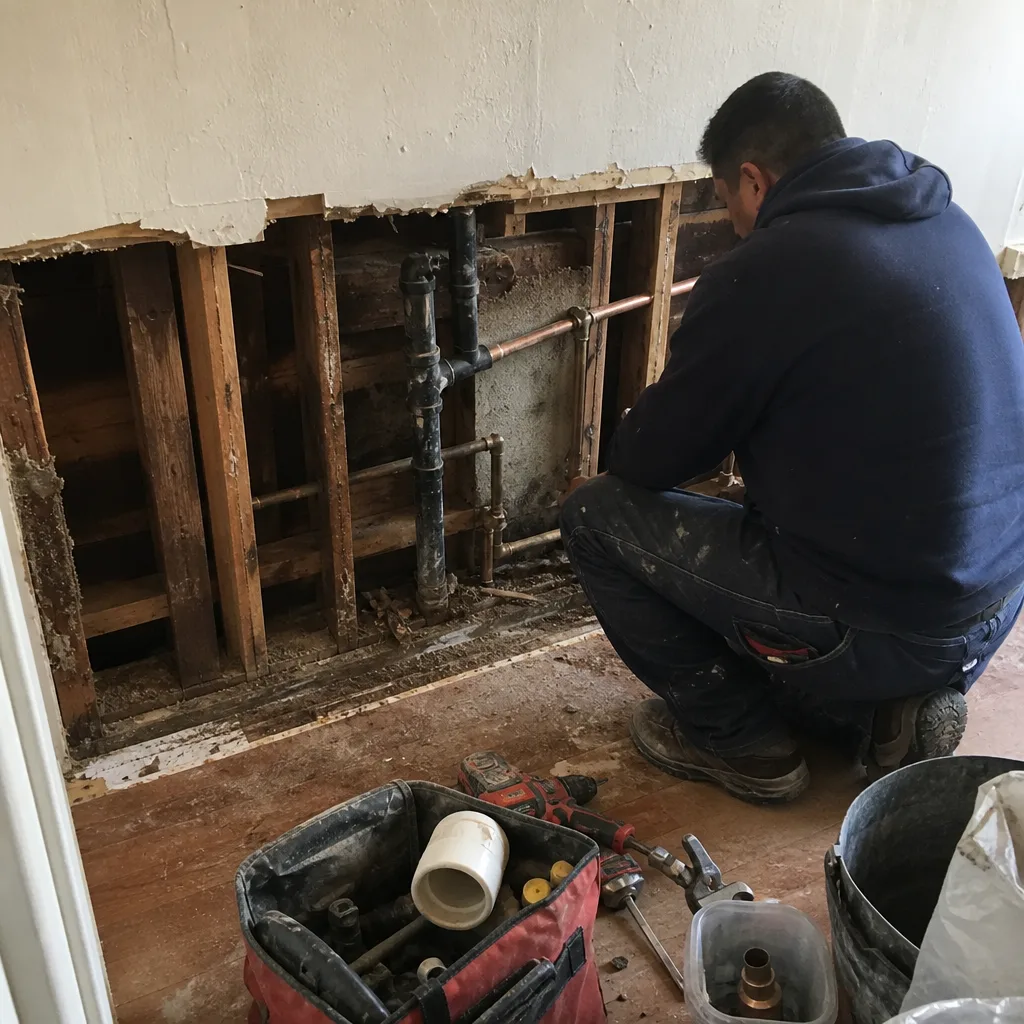
At Home Renovation in Daly City, we find that a significant share of kitchen and bath renovation projects begin because a small leak, present for years, finally caused enough damage to make the problem visible. The homeowner didn’t know because the warning signs were masked by Daly City’s naturally humid conditions. A semi-annual check of all plumbing fittings and water-using appliances prevents most of these discoveries.
Documentation and Permit History for Resale
Daly City has become a market where buyers increasingly request proof of maintenance and permitted work before closing. The days of handshake disclosures and vague promises are over: institutional buyers, first-time buyers using VA or FHA financing, and buyers who have been burned by unpermitted work all want documentation.
For homeowners maintaining a property over the long term, this means keeping records that a future buyer can review. Document every roof repair, every window replacement, every drainage correction, every plumbing repair, every foundation inspection. Keep the receipts, photographs, and material specifications in a single file, digital or physical, that you can hand to a buyer’s agent.
Permitted work is especially important in Daly City, where the Building Division maintains records that can be pulled by prospective buyers. A roof replacement done without a permit becomes a disclosure issue at sale. A water heater replacement that didn’t get a mechanical permit can slow down closing. Even if the work was completed correctly, the missing permit creates doubt about what was done and how.
A general contractor’s annual walkthrough generates another form of documentation: a dated inspection record with photographs showing the condition of the major systems. These records, accumulated over years, demonstrate that the property was maintained consistently. In our experience, that continuity of documentation adds more value at sale than the cost of the inspections.
A Seasonal Maintenance Calendar for Daly City
Daly City’s maintenance calendar isn’t a generic spring-and-fall rhythm. The marine layer follows predictable patterns, and the wet season’s start and end dictate the inspection timing. Here is the annual cycle:
Spring: Late March to Early May
- Inspect all roof penetrations and flashing after winter rains have stopped. Look for lifted shingles, cracked sealant, and rust.
- Check windows and doors on the west-facing elevation specifically; paint and caulk failures show first there.
- Inspect fence posts and gates for movement after the rainy season saturation; schedule any repairs before the ground fully dries and the post locks into its shifted position.
- Service all exterior paint and caulk that shows cracking; Daly City’s stable temperatures allow year-round painting, but spring gives the surface the best drying window.
Summer: June to August
- Clear roof drains and gutters before the windy season deposits more sand and debris.
- Check that crawl space vents are open and unobstructed; summer is the only period when Daly City’s air is dry enough to actively ventilate the space.
- Inspect hardscape for hairline cracking and paver settlement; summer soil is at its firmest, making it the best time to address compaction issues under slabs and walkways.
Fall: September to Mid-November
- Prepare for the rainy season by inspecting drainage: clean gutters, check downspouts, and verify that the soil grade still slopes away from the foundation.
- Repair any gutter seams or joints that show rust or separation, because the sustained winter rains will exploit every crack.
- Check chimney flashings and skylight seals before the first heavy rain; sealant repairs set better in fall’s warmer temperatures.
Winter: December to February
- During heavy rain, walk the interior of the home and look for moisture staining on ceilings, walls, and around window frames. These storms are the fastest way to see which exterior seals have already failed.
- Check under sinks and around water heaters after continuous rain; the increased groundwater can push water into below-grade plumbing and foundation areas.
- Document any evidence of hillside movement: cracks in retaining walls, shifting fence lines, or expansion in driveway slabs.
Each of these seasonal tasks is simple enough on its own. The difficulty is maintaining the rhythm year after year without missing a season, which is where an annual contractor walkthrough becomes cost-effective as a backstop.
Common Mistakes to Avoid
- Checking the roof only after a leak appears. By the time water is visible inside, the exterior failure has already compromised flashing, underlayment, or framing. Daly City’s slow, lateral moisture movement means interior leaks are often the last symptom of a multi-year problem.
- Caulking over failed caulk. Applying new sealant over old cracked caulk creates a cosmetic fix that traps moisture underneath and accelerates the underlying rot. Failed caulk must be removed, the joint cleaned and dried, and then fresh sealant applied.
- Ignoring the underside of trim and fascia. The painted face of a fascia board can look fine while the underside has already rotted through. Inspect the surfaces you can’t see from the street level.
- Assuming a retaining wall is structurally stable because it isn’t leaning. Hydrostatic pressure builds behind retaining walls over years. The wall can appear vertical and still be carrying a full water load that will eventually cause sudden failure.
- Treating paint peeling as a paint problem. On Daly City’s west-facing walls, peeling paint is usually a flashing or seal failure behind the siding, not a finish-quality issue. Repainting without fixing the water entry just creates another peeling cycle.
- Waiting for spring to schedule work. The best repair window in Daly City is late summer and early fall, when the ground is firm and surfaces are dry enough for sealants and coatings to set properly, before the rainy season begins.
- Not documenting maintenance. Even if the work is done well, without receipts and permits, a future buyer has no reason to believe it. Documentation converts maintenance spending into resale value.
See the difference
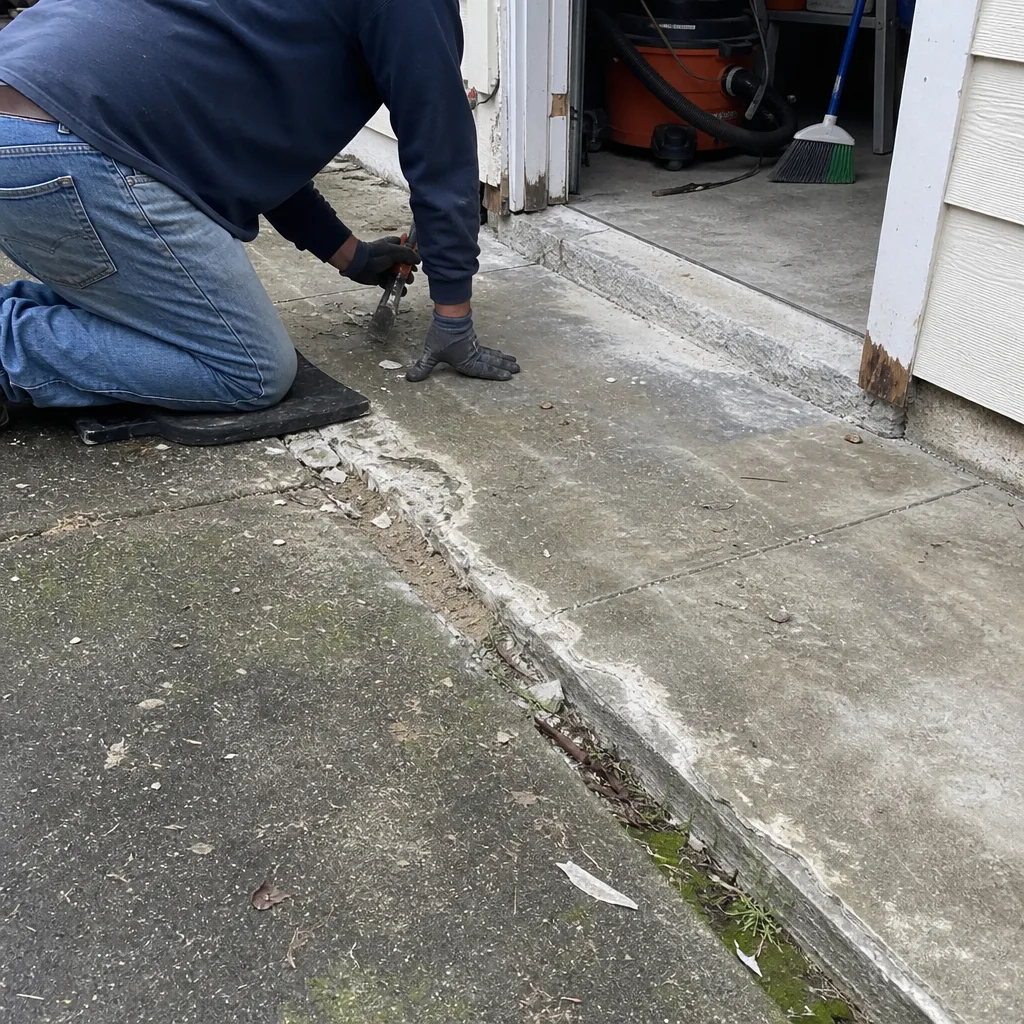 Before
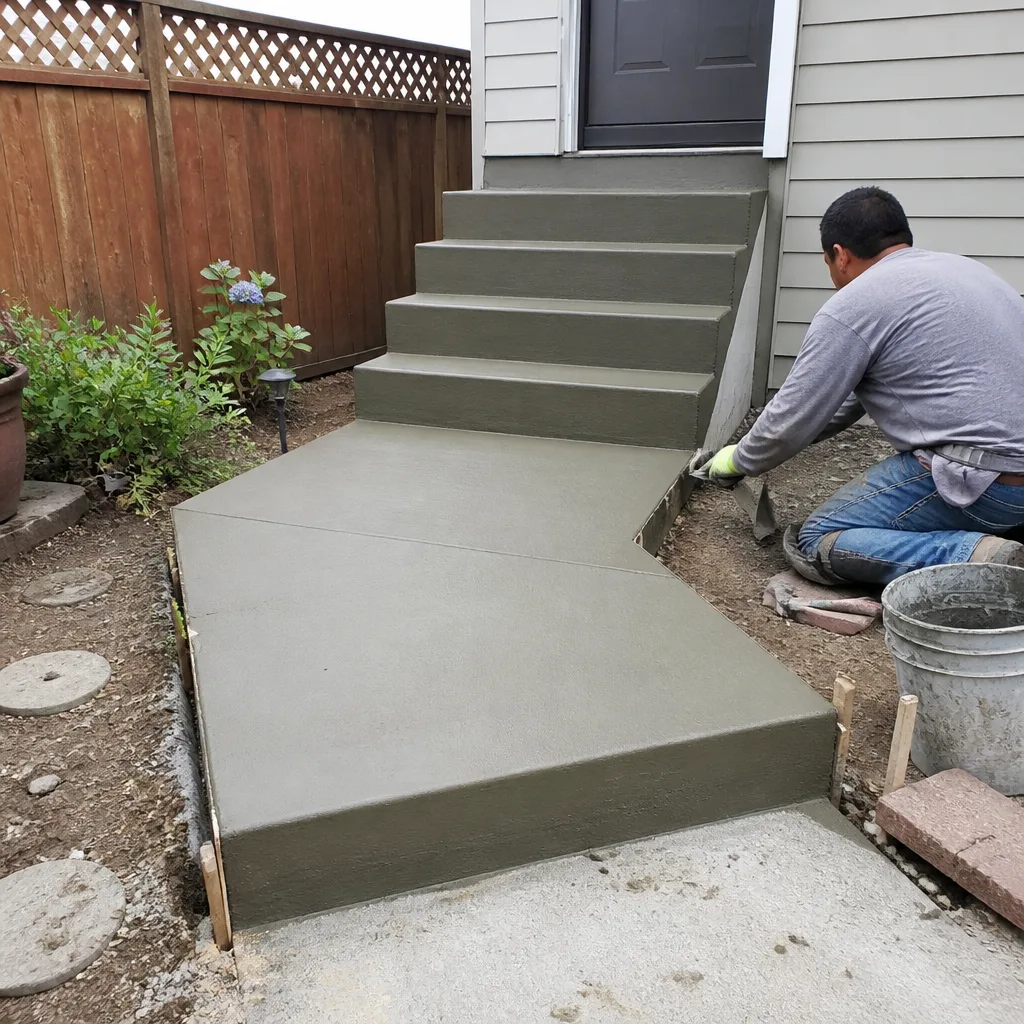 After
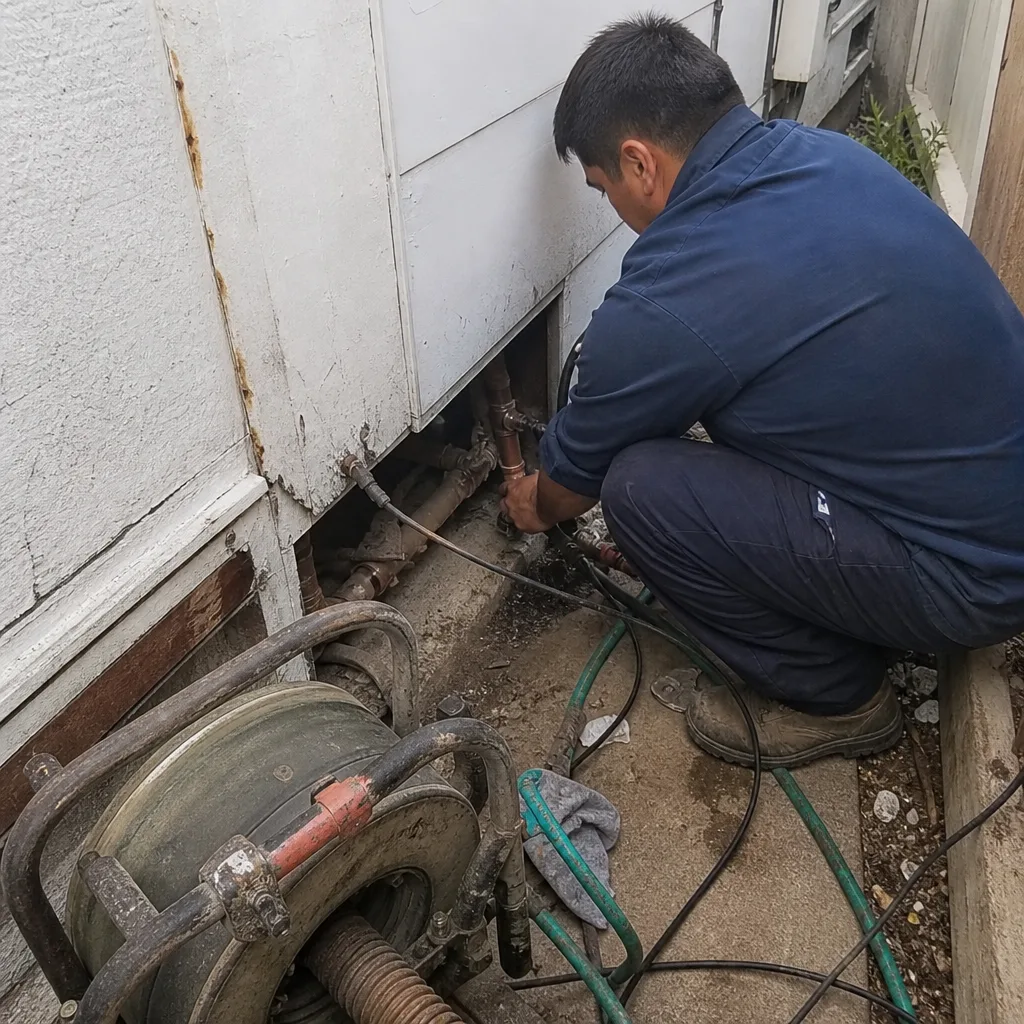 Before
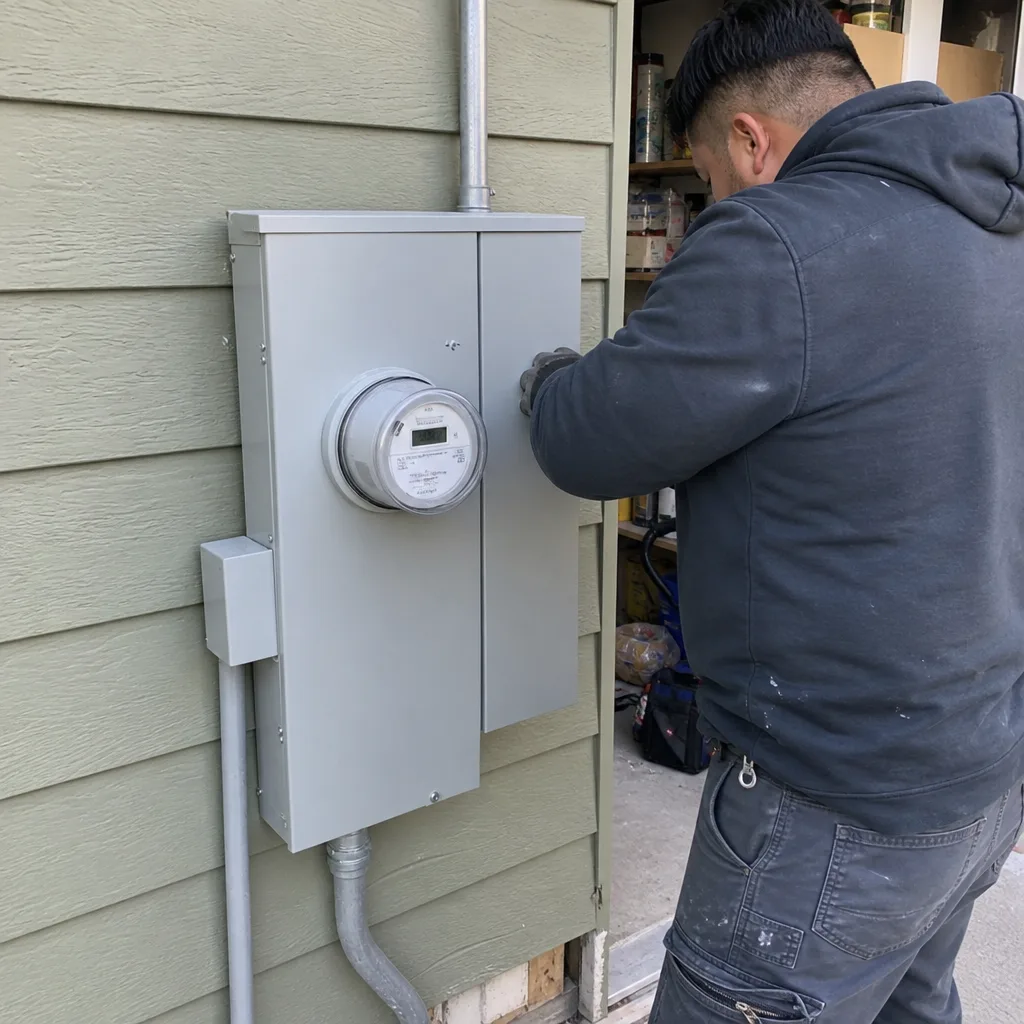 After
 Before
 After
When to Call a Professional
Several signs indicate the maintenance window has closed and a professional repair is needed. If you see water staining on interior ceilings or walls that reappears after cleaning, the interior inspection has already failed and the source needs remediation. If windows or doors no longer close flush with their frames, the opening has shifted enough that simple seal replacement won’t fix the issue. If a retaining wall shows any forward lean, cracking wider than 1/4 inch, or movement after heavy rain, the wall is carrying water pressure that a homeowner cannot safely address. If roof granules appear in gutters after every rain, the shingle surface is degrading faster than normal and needs material evaluation. Daly City Construction offers free estimates in Daly City, call (866) 505-5254 for an assessment.
Frequently Asked Questions
Inspect the exterior seals, drainage, and roof penetrations twice per year: once in spring after the rains stop, and once in fall before the rainy season begins. Daly City’s marine layer means sealant and flashing degrade faster here than in drier Bay Area communities, so the six-month interval is what catches failures before they compound. Call (866) 505-5254 to schedule a professional walkthrough if you’ve missed more than two consecutive inspection cycles.
The first signs are paint lifting at the bottom corners of window and door frames, caulk cracking on west-facing walls, and surface rust on exterior hardware. These appear years before structural rot or interior moisture, and they indicate that water is getting past the exterior seal. Calling a contractor at this stage, when repairs are still exterior and cosmetic, saves the cost of interior reconstruction later.
Routine maintenance like caulking, painting, and seal replacement doesn’t require a permit. But any repair that involves structural elements, roofing replacements covering more than a certain area, window or door replacement, or plumbing and electrical work likely requires a permit from the Daly City Building Division. We pull permits for all work that requires them and close them with final inspections, which protects your resale documentation.
The cost varies by property size and scope, but annual inspections are far less expensive than the repairs they prevent. A cracked window seal left untreated becomes frame rot that requires full window replacement; a flashing failure caught early is a re-caulking job, caught late it’s interior drywall and insulation replacement. Call (866) 505-5254 for an exact quote for your home.
Start with a full exterior assessment: roof, flashing, windows, doors, siding, drainage, and foundation. This tells you what’s failing now and what’s likely to fail soon. From there, prioritize repairs by water intrusion risk, not by visibility. A slow flashing leak in the attic is more urgent than peeling paint on a visible wall. A professional assessment from Daly City Construction home gives you that prioritized list in a single walkthrough.
Many of the inspection steps are DIY-friendly, and the seasonal checklist in this guide is designed for homeowners to use directly. But repairs involving roofing, flashing, drainage correction, retaining walls, or structural work should be handled by a licensed contractor. The interaction points where multiple systems meet are where homeowners miss failures that a professional catches immediately. If you spot an issue you’re not sure about, call (866) 505-5254 before it worsens.
The Bottom Line
Daly City’s marine layer, salt air, and expansive hillside soils create a maintenance profile that generic checklists miss. The failures start at the interaction points: roof flashing against siding, caulk against window frames, drainage outlet against foundation walls. Twice-yearly inspections, focused on those junctions and the west-facing elevations, catch problems when repairs are still measured in dollars per foot instead of thousands per room. Documentation matters, especially in a market where buyers now demand proof of upkeep. Daly City Construction builds and repairs homes across Daly City and the surrounding Peninsula, with the team and material knowledge to handle every phase of the work, from a single flashing repair to a whole-home renovation. Call (866) 505-5254 to schedule your free estimate.
Written by the team at Daly City Construction, serving Daly City since 2013. For more guides & resources, visit our blog.