

Last updated October 31, 2026
 Home additions & ADU
 Kitchen remodeling
 Bathroom remodeling
 Roofing
 Windows & doors
 Driveway & pavers
 Fence
Free written scope consultation - allowances, timeline, and change-order rules on paper before a single trade is scheduled
Construction Warning Signs: A Daly City Homeowner’s Reference Guide
Most construction warning sign articles read like a post-mortem: here’s what the damage looks like after the ceiling has fallen in. That’s useful if you’re already in crisis. It’s useless if you want to catch the problem before the crisis starts. A 1960s Daly City home with its original roofing and single-pane aluminum windows isn’t just inefficient. It’s one wet winter away from moisture intrusion that triggers mold remediation costs that dwarf the replacement price. This guide is organized differently. We’ve structured it around what you can see, touch, and measure right now, before the emergency, with specific attention to the failure patterns most common in Daly City’s housing stock, which skews heavily toward mid-century construction.
Quick Answer
The top construction warning signs in Daly City homes are exterior moisture intrusion points: lifted or corroded roof flashing, fascia discoloration, paint checking on siding, step cracking in foundation concrete, and fogging or condensation between double-pane window glass. These signal that water is already finding its way into wall cavities, sill plates, and subflooring. If you see more than two of these in the same zone of your home, schedule a multi-trade inspection before the next heavy fog season or winter storm cycle.
Styles & brands we work with
Table of Contents
- Roof Flashing Lift, Corrosion, and the Daly City Fog Factor
- Paint Checking, Siding Cupping, and What Your Exterior Walls Are Telling You
- Foundation Step Cracking and Retaining Wall Displacement on Hillside Lots
- Window and Door Warning Signs: Frame Rot Versus Seal Failure
- Interior Warning Signs and the Exterior Systems They Point To
- Hardscaping and Fence Warning Signs on Sloped Terrain
- Room Addition and ADU Construction Warning Signs
- Why Multi-Trade Diagnosis Matters More Than Single-Trade Estimates
Roof Flashing Lift, Corrosion, and the Daly City Fog Factor
Daly City’s fog is not a cosmetic weather condition. It’s a moisture delivery system. Homes in the Westlake, St. Francis Heights, and Serramonte neighborhoods endure 200+ fog hours per year, and that fog settles into every gap, seam, and joint on your roofline. The first place it shows is flashing.
Roof flashing is the metal material, usually galvanized steel, aluminum, or copper, that seals the transitions where your roof meets a vertical surface: chimneys, vent pipes, skylights, and walls. In Daly City, we routinely see flashing that has lifted along its edges after years of wind-driven moisture working against the sealant. The metal doesn’t have to look rusted to be failing. A lifted edge of even a quarter-inch is a water entry point. Once moisture gets behind the flashing, it migrates down the roof deck and into the wall cavity. The damage occurs out of sight for months or years before it presents as a ceiling stain.
What to look for from the ground or a ladder:
- Flashing edges that are visibly separated from the roof surface, especially around the chimney and plumbing vent boots
- Dark staining or streaking on the fascia board directly below flashing junctions
- Caulk that has shrunk, cracked, or pulled away from the flashing seam
- Rust-colored staining on galvanized flashing near the roof peak, where fog condensation concentrates
- Granules from asphalt shingles collecting in gutters, which indicates the shingle layer is degrading and exposing the underlayment at flashing points
We work with a six-brand roofing portfolio that includes GAF, CertainTeed, Owens Corning, IKO, Atlas, Tamko, and Boral. The reason this matters for flashing is simple: mid-century Daly City homes often have original flashing that was never designed for modern roof systems. When we replace a roof on a 1950s or 1960s home, the flashing detail specification changes. Getting the flashing right is not a siding problem or a gutter problem. It’s a roofing problem, and it requires a contractor who understands roof geometry, not just shingle installation. If you’re seeing any of the signs above, read more about how a General Contractor in Daly City approaches whole-roof assessment before you call a single-trade roofer for a patch quote.
Daly City-specific reality: The combination of coastal moisture and afternoon wind means flashing failure on the west-facing roof slope typically occurs 5 to 8 years earlier than on the east-facing slope. If you’re inspecting your own roof, start on the side that faces the ocean. That’s where the problems are.
Paint Checking, Siding Cupping, and What Your Exterior Walls Are Telling You
Exterior paint failure in Daly City is rarely just a paint problem. That’s the key distinction most guides miss. When paint checks, cracks, or peels in a specific pattern, it’s telling you something about the substrate underneath. And in Daly City’s mid-century housing stock, the substrate is often original redwood or cedar siding that has been painted over multiple times since the Eisenhower administration.
Here’s what the patterns mean:
- Alligator checking – a pattern of interconnected cracks resembling reptile skin – means the paint film is too thick and has lost its flexibility. The paint is failing, but the wood underneath is often fine. This is the best-case scenario.
- Vertical cracking along board edges – this indicates the siding boards themselves are swelling and contracting. Moisture is getting behind the siding. The boards are expanding, which cracks the paint film at the joints. This is an early warning sign of wall cavity moisture.
- Cupping or warping – when siding boards develop a concave or convex profile, the back side of the board is wetter than the front. This is a moisture intrusion problem, not a paint problem. Repainting cupped boards is wasted money.
- Peeling in isolated patches – localized peeling usually traces back to a specific water source: a leaking gutter, a failed window header, or a plumbing vent that’s discharging moisture into the wall.
In our experience working across Daly City neighborhoods from Broadmoor to Crocker, paint checking on the north-facing walls appears 3 to 4 years before the same pattern shows on south-facing walls. Fog lingers on the north side. It saturates the paint film and then the sun bakes it, cycling the surface through expansion and contraction hundreds of times per year.
The material upgrade conversation starts here. We recommend James Hardie fiber-cement siding for Daly City homes precisely because it was engineered for this kind of moisture cycling. It doesn’t swell, rot, or cup the way wood does. It costs more up front than repainting, but repainting wood siding that’s already cupping is a repeated cost with diminishing returns. If you’re weighing siding replacement as a component of a larger Home Remodeling in Daly City, the siding decision should happen before the interior work, not after. There’s no point installing new drywall behind a wall that’s still letting water in.
Foundation Step Cracking and Retaining Wall Displacement on Hillside Lots
Daly City is a city of hills. A significant portion of the housing stock sits on slopes, cut-and-fill lots, or terraced grade changes. This means foundation warning signs here are not the same as foundation warning signs in flat suburban developments in the Central Valley or the South Bay. Hillside foundations carry lateral load, not just vertical load. The soil pushes sideways against the foundation wall. When that lateral pressure exceeds what the wall was built to handle, you get step cracking.
Step cracking is a crack pattern in concrete or masonry that follows the mortar joints or form lines in a stair-step pattern. In a flat foundation, it usually indicates settling. On a hillside, it often indicates lateral movement. The distinction matters because the repair approaches are completely different. Underpinning a settling foundation is not the same as installing tie-backs or buttressing a retaining wall that’s being pushed downhill.
Warning signs that require immediate structural review:
- Step cracks wider than 1/8 inch in foundation walls on the downhill side of the home
- Horizontal cracking in retaining walls, which indicates the wall is failing in bending
- Fence posts leaning downhill at the property line, which is an early indicator of soil creep
- Concrete driveway slabs that have separated more than 1/2 inch at expansion joints
- Doors and windows that stick seasonally, which indicates the wall framing is moving relative to the foundation
We want to be clear about this: foundation and retaining wall issues on Daly City hillsides are not DIY territory. They require a structural engineer’s assessment and a contractor who understands soil mechanics, drainage, and load transfer. The wrong repair can accelerate the failure. If you see step cracking, the first call should be to a Home Renovation in Daly City specialist who can bring structural expertise to the assessment, not to a handyman who will fill the crack with epoxy and call it fixed. Epoxy fills cracks. It does not stop the soil from pushing.
One more Daly City-specific note: many of the retaining walls built in the 1950s and 1960s were constructed without drainage behind the wall. The original builders assumed the soil would drain naturally. On a Daly City hillside, during a wet winter, that assumption fails. Water saturates the soil behind the wall, the saturated soil expands, and the hydrostatic pressure pushes the wall outward. If your retaining wall shows any displacement after a rainy season, that’s the mechanism. The fix is not just rebuilding the wall. It’s installing proper drainage behind it. Any contractor who skips the drainage detail is signing you up for the same failure in another 10 years.
Window and Door Warning Signs: Frame Rot Versus Seal Failure
This is one of the most misunderstood distinctions in home maintenance. A foggy window and a rotting window frame are completely different problems with different causes, different repair scopes, and very different costs. In Daly City’s mid-century homes, both are common, but they don’t happen together by default.
Seal failure is what causes fogging or condensation between the panes of a double-pane or triple-pane window. The insulating glass unit, often called the IGU, has a seal around its perimeter that keeps the argon or krypton gas inside and moisture out. When that seal fails, the gas escapes, moisture gets in, and you see condensation that you can’t wipe away because it’s inside the glass assembly. Seal failure reduces the window’s thermal performance. It does not rot the frame. The repair is IGU replacement, which can be done without replacing the entire window frame if the frame is otherwise sound.
Frame rot is entirely different. It happens in wood window frames and wood door jambs when water has been penetrating the exterior and saturating the wood. In Daly City, we see this most often on west-facing windows, where wind-driven fog and rain hit the window directly. The telltale signs:
- Soft spots in the wood frame that you can press with a finger or a screwdriver tip
- Paint that won’t stay adhered to the frame, even after proper prep
- Visible fungal growth or dark streaking on the interior of the frame
- Doors that no longer close properly because the jamb has swollen or shifted
- Visible gaps between the window frame and the siding outside
The cost difference is significant. A seal failure repair might involve replacing the IGU only. A frame rot repair involves removing the window, cutting out the rotted wood, and rebuilding the rough opening, which often reveals additional rot in the wall framing behind the window. That’s a much bigger job, and it’s one that crosses into multiple trades: framing, window installation, siding repair, and sometimes drywall repair inside.
When we scope window and door replacement in Daly City, we carry options from Therma-Tru for doors and a range of window manufacturers across premium-to-value tiers. The brand matters less than the installation detail. A replacement window installed into a rotted rough opening will fail again. Part of what we do as a full-scope Daly City Construction home contractor is inspect the rough opening before the window goes in. A single-trade window installer may not have the framing expertise to catch that rot, and they may not be incentivized to, since their scope ends at the window itself. That’s where the single-contractor model actually changes outcomes. We’re responsible for the opening, not just the unit that goes into it.
Interior Warning Signs and the Exterior Systems They Point To
Homeowners often treat interior warning signs as interior problems. That’s backwards. Ceiling stains, floor bounce, and door binding are symptoms. The cause is usually outside the room where the symptom appears. Understanding which exterior system corresponds to which interior symptom is the single most valuable diagnostic skill a homeowner can develop, because it determines which contractor you call and what the repair estimate should include.
Ceiling stains: A brown stain on a ceiling usually means water has found a path from the roof or an upstairs plumbing fixture into the ceiling cavity. The water travels along rafters or joists, so the stain often appears several feet away from the actual leak point. The rule of thumb: if the stain appears near an exterior wall, suspect the roof or wall flashing. If it appears under a bathroom or kitchen, suspect a supply line or drain leak. If it appears in the middle of the ceiling with no plumbing above, suspect a roof penetration like a vent pipe or roof valley.
Door binding: An interior door that suddenly sticks or won’t latch is often a sign that the wall framing is moving. On a Daly City hillside, this can indicate seasonal soil movement against the foundation. It can also indicate a moisture problem: wet framing swells, and the door that was fine in the dry season binds in the wet season. If the binding is seasonal and predictable, the foundation is likely moving with soil moisture. If the binding is sudden and persistent, start looking for a water source.
Floor bounce or sag: A floor that feels spongy underfoot or visibly sags between joists usually indicates joist damage. The two most common causes in Daly City are moisture-related: either a slow plumbing leak that has saturated and rotted the joists, or a crawlspace moisture problem that has led to fungal decay. Mid-century homes built over vented crawlspaces are particularly vulnerable, because the crawlspace is open to Daly City’s humid air, which condenses on cold framing during the fog season.
The reason a multi-trade general contractor is valuable here is that the diagnostic path crosses system boundaries. A ceiling stain might be a roof problem, a plumbing problem, or a wall flashing problem. A single-trade roofer will always find a roof problem. A plumber will find a plumbing problem. What you need is someone who can look at the whole system and identify the actual source. That’s the practical meaning of the General Contractor in Daly City model: one point of accountability for diagnosis, not just installation.
Hardscaping and Fence Warning Signs on Sloped Terrain
Hardscaping failures on Daly City hillside lots don’t stay in the yard. They migrate. A settling paver patio near the house changes the surface drainage pattern, which then directs water toward the foundation, which then creates a foundation problem that presents inside the house. The chain of causation matters, because the repair estimate has to address the drainage problem, not just the pavers.
Warning signs in hardscaping and fencing:
- Paver areas that have developed low spots where water pools after rain
- Concrete walkways that have tipped toward the house, creating negative slope
- Fence posts that lean downhill at a consistent angle, indicating soil creep
- Retaining wall caps that have shifted or separated, indicating wall movement behind the cap
- Concrete expansion joints that have widened at the top but not the bottom, indicating slab rotation
We work with hardscape material manufacturers including Cambridge Pavers and Oldcastle, and concrete products from Quikrete and Sakrete. The product choice matters, but on a Daly City slope, the base preparation matters more. A paver patio installed on an inadequately compacted base on a 15% grade will fail regardless of which paver brand was used. Proper base depth, proper compaction, and proper drainage behind and under the hardscape are the variables that determine whether the installation lasts 5 years or 30.
Fence post lean deserves special attention because it’s the cheapest diagnostic signal on your property. A fence post leaning downhill on a Daly City hillside is doing the same work as a soil movement indicator. The question is whether it’s leaning because the post is rotting at the base, in which case it’s a fence problem, or because the soil itself is slowly moving, in which case it’s a geotechnical warning sign for your foundation and retaining walls. The way to tell: if multiple posts lean at different angles, the posts are probably failing individually. If all the posts lean in the same direction at roughly the same angle, the soil is moving. That’s a different conversation entirely, and it’s one that should involve a structural assessment of the property boundary, not just a fence repair quote.
Room Addition and ADU Construction Warning Signs
Not all construction warning signs are about existing conditions. Some are about the planning stage before construction starts. Daly City homeowners adding a room addition or building an ADU face a specific set of warning signs that indicate the project is about to go wrong. These are the signs we tell homeowners to watch for in the contractor selection and planning process.
Warning signs before construction starts:
- Missing structural plans: Any legitimate room addition or ADU project in Daly City requires structural engineering drawings submitted with the permit application. If a contractor suggests skipping this step or implies that permits are optional, walk away. Daly City’s planning department requires permits for additions and ADUs. Unpermitted work becomes a liability when you sell the home.
- Soil report avoidance: On a Daly City hillside lot, a soils report is not a nice-to-have. It determines the foundation design. A contractor who quotes an addition without a soils report on a sloped lot is guessing, and you’ll pay for the guess.
- Vague material specifications: A bid that says “mid-grade finishes” or “standard cabinetry” without naming specific manufacturers is a sign that the contractor hasn’t done the material selection work. We scope projects with named brands: KraftMaid or custom cabinetry, Cambria or Caesarstone countertops, Kohler or American Standard fixtures. You should know what you’re buying before you sign.
- Prefab ADU pushback: Daly City is one of the few Bay Area markets where prefab ADU construction is genuinely viable, because lot access and grading often favor controlled factory-built modules. Contractors who don’t work with prefab manufacturers like Abodu, Dvele, Mighty Buildings, Boxabl, or Plant Prefab will often talk prefab down, usually because they don’t have the capability to install it. The warning sign is a contractor who dismisses prefab outright rather than evaluating it against your specific lot conditions and budget.
- Separate bids for separate phases: If the addition quote doesn’t include site work, foundation, framing, roofing, electrical, plumbing, and finish work under one scope, you’ll face change orders at every phase boundary. We structure addition and ADU bids as single-scope proposals with material selections documented before construction starts.
An ADU on a Daly City lot is a legitimate long-term investment, either as added living space or rental income. But the investment assumption only works if the construction is done to code with materials that perform in this climate. A poorly detailed ADU with a roof flashing failure in year two becomes a liability, not an asset.
Why Multi-Trade Diagnosis Matters More Than Single-Trade Estimates
The most expensive construction repair in a Daly City home is the one that gets misdiagnosed. We’ve seen it repeatedly: a homeowner sees a ceiling stain, calls a roofer, the roofer replaces a section of shingles, and the stain comes back. Then a plumber is called, the plumber finds no leak, and the stain comes back. Then someone finally looks at the wall flashing behind the exterior siding, and finds the actual water entry point. By that point, the homeowner has paid for two wrong repairs and the water has been damaging the wall cavity for another six months.
This is the failure pattern that the single-trade contractor model creates. Each trade looks at the problem through its own lens. The roofer sees a roof problem. The plumber sees a plumbing problem. The window installer sees a window problem. The problem crosses system boundaries, and no one is accountable for the boundary itself.
The multi-trade general contractor model is different. When we inspect a home in Daly City with a moisture-related warning sign, we evaluate the roof, the wall assembly, the window and door openings, the foundation drainage, and the site grading as one connected system. The goal is to identify the source of the problem, not just treat the symptom. That’s why we carry the trade scope we do: roofing, windows and doors, kitchen and bath remodeling, hardscaping, fencing, siding, and ADU or prefab structure construction under one license. The diagnostic value of that scope is the ability to follow the problem wherever it leads.
This is also why material selection matters. A contractor who only installs one brand of window or one brand of shingle will recommend that brand regardless of whether it’s the right product for your situation. We maintain relationships with a vetted portfolio of 50+ manufacturer brands across six renovation categories. That depth exists so the material recommendation can match the actual project requirements, not the contractor’s limited inventory. Cambria or Caesarstone for the countertops. GAF or Owens Corning for the roof. Kohler or American Standard for the fixtures. James Hardie for the siding. Schluter for the tile edge and waterproofing details. The choices should serve the project, not the contractor’s margins.
Common Mistakes to Avoid
- Repainting cupped siding. Cupping is a moisture symptom, not a paint failure. Painting over it wastes the paint cost and delays the necessary repair. The boards will continue to cup under the new paint film.
- Caulking over lifted flashing. Caulk is a temporary patch, not a repair. On a Daly City roof, caulk applied over lifted flashing will fail within one or two fog seasons. The flashing needs to be mechanically re-secured or replaced.
- Replacing a single window without inspecting the rough opening. If the frame rot extends into the wall framing, the new window will be installed into a compromised opening. The rot continues behind the new unit. Inspect the opening before the window goes in.
- Filling foundation step cracks with epoxy without determining the cause. Epoxy fills concrete. It does not stop hillside soil movement. If the soil is pushing the foundation, the crack will reopen or a new crack will form adjacent to the filled one.
- Ignoring fence post lean because “it’s just a fence.” On a Daly City hillside, uniform fence post lean can be an early indicator of soil creep that will eventually affect the foundation or retaining walls. A $50 fence post repair can be the cheapest structural early warning on the property.
- Getting separate quotes from separate trades for a multi-system problem. When a ceiling stain could be a roof, plumbing, or flashing problem, you need a single diagnostic evaluation. Three trades will give you three answers and three invoices, and the source may remain unidentified.
See the difference
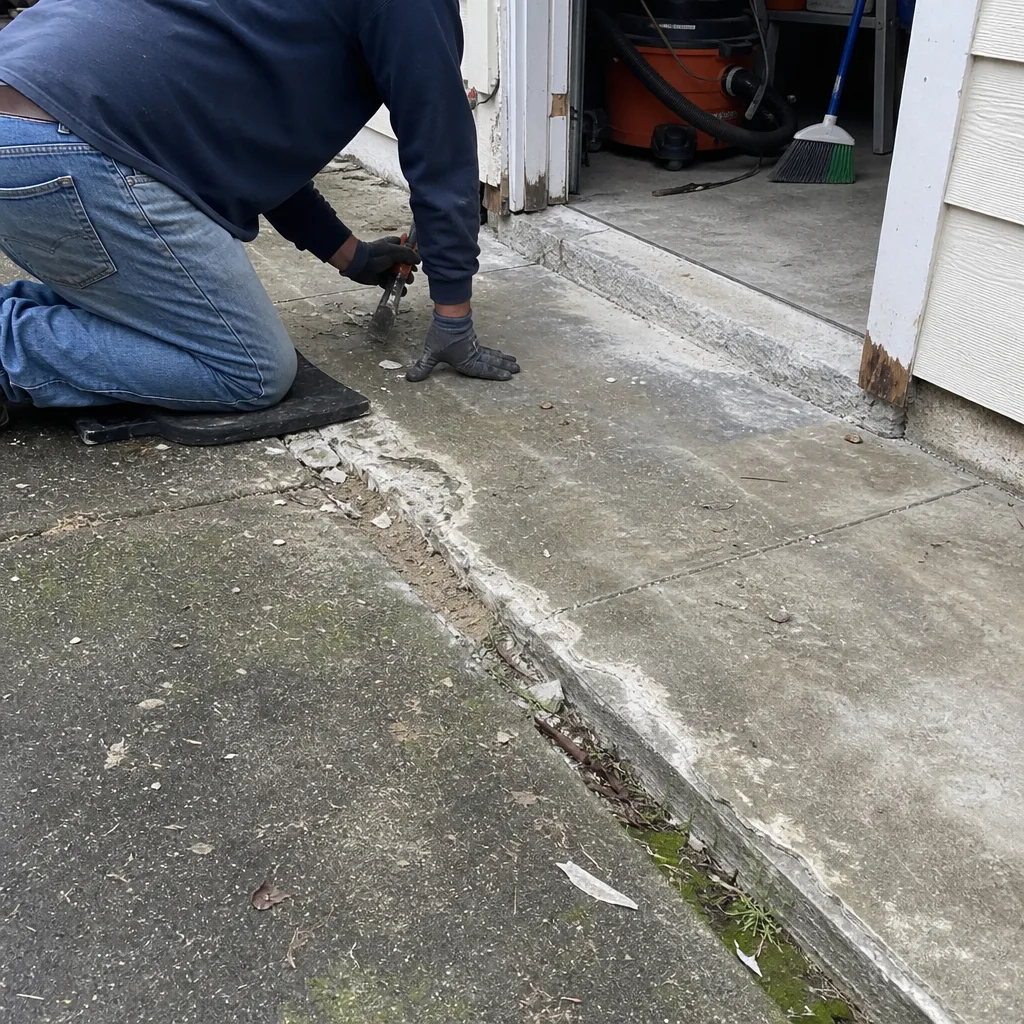 Before
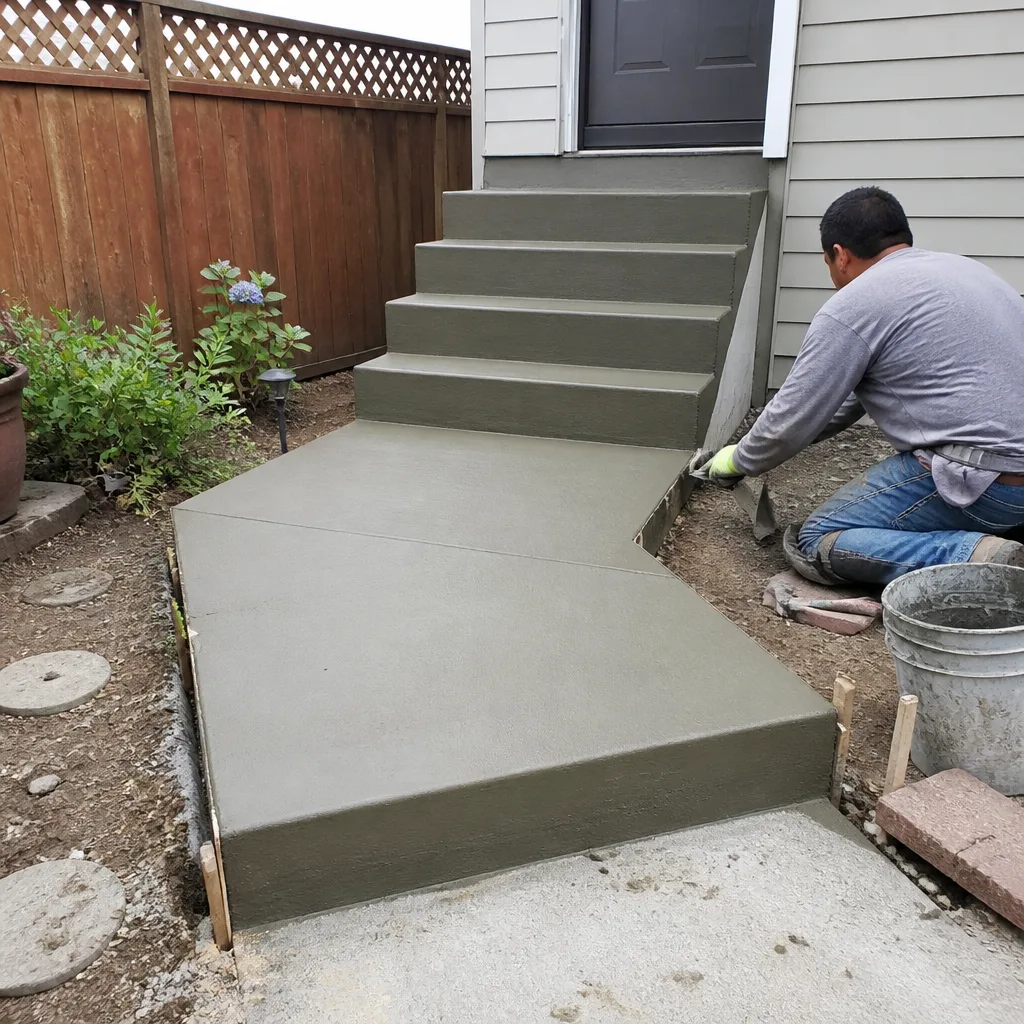 After
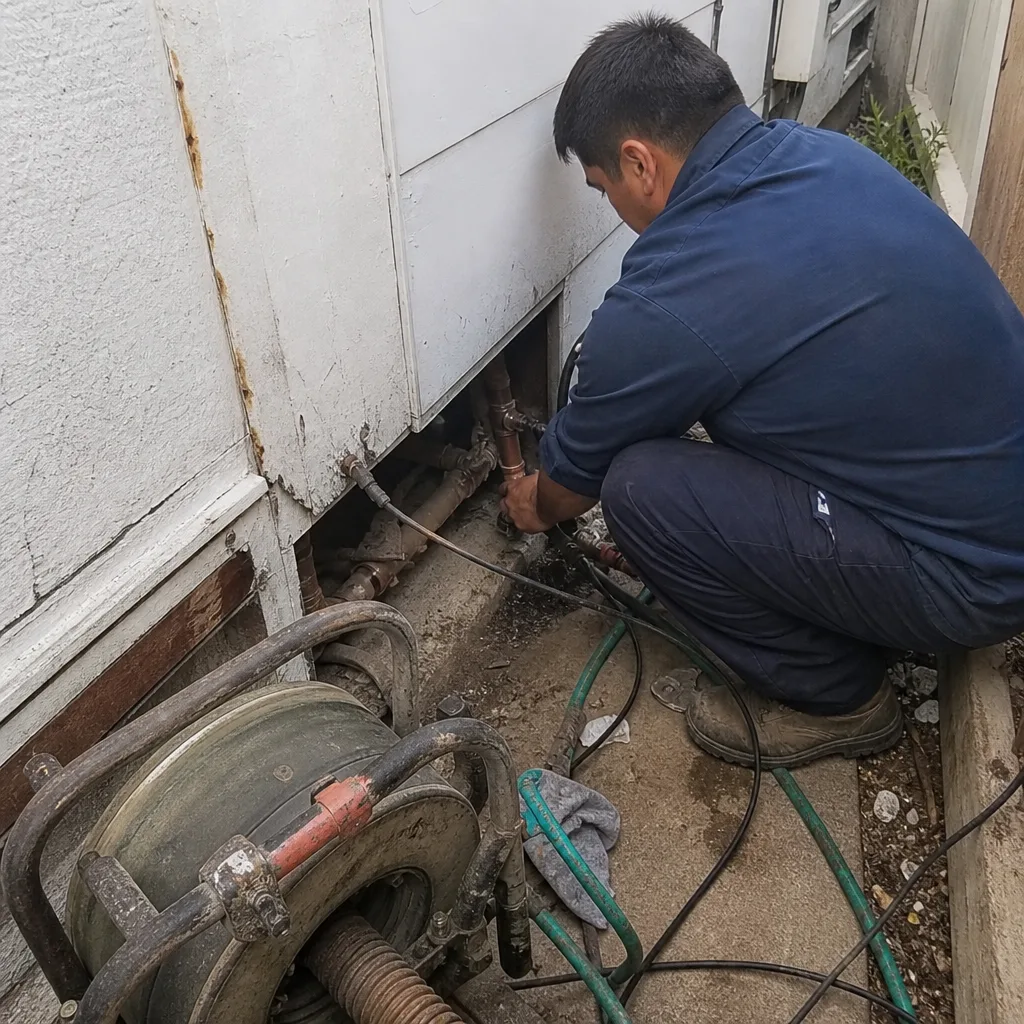 Before
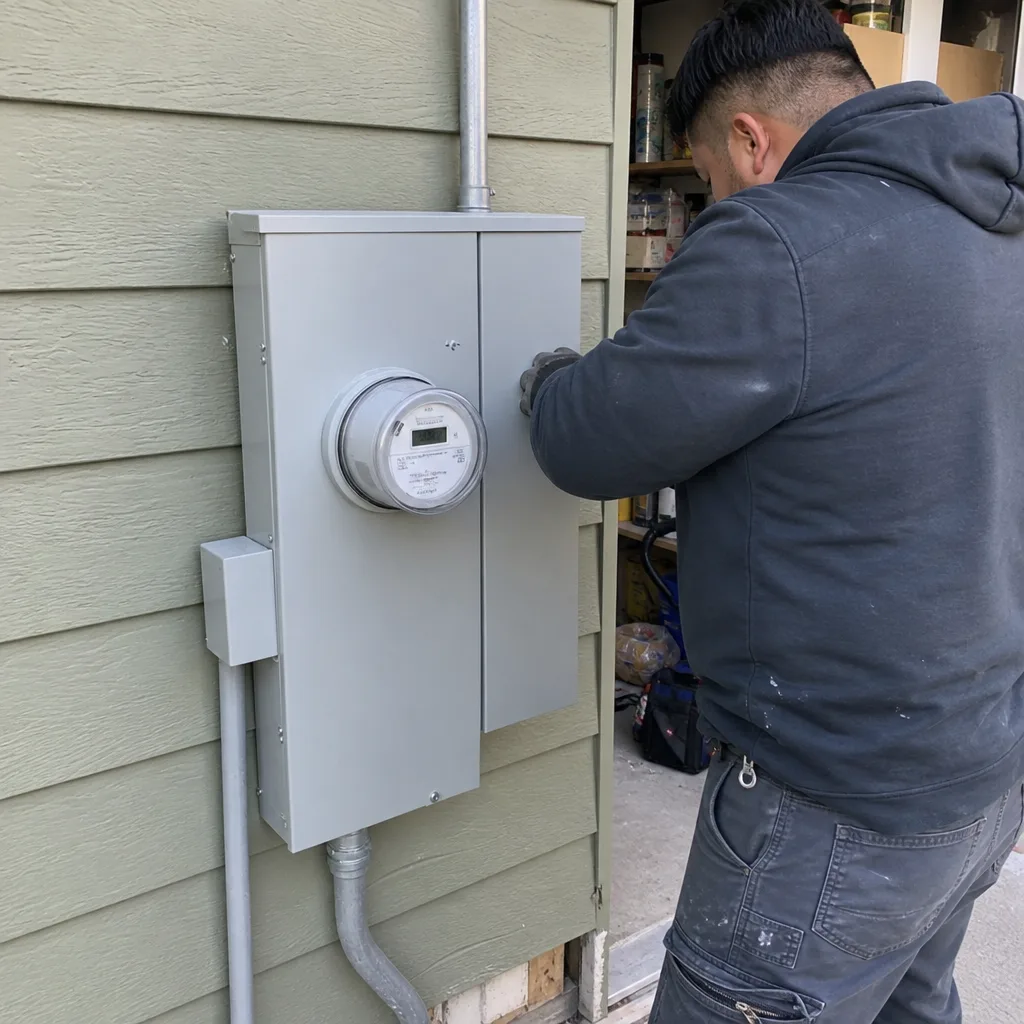 After
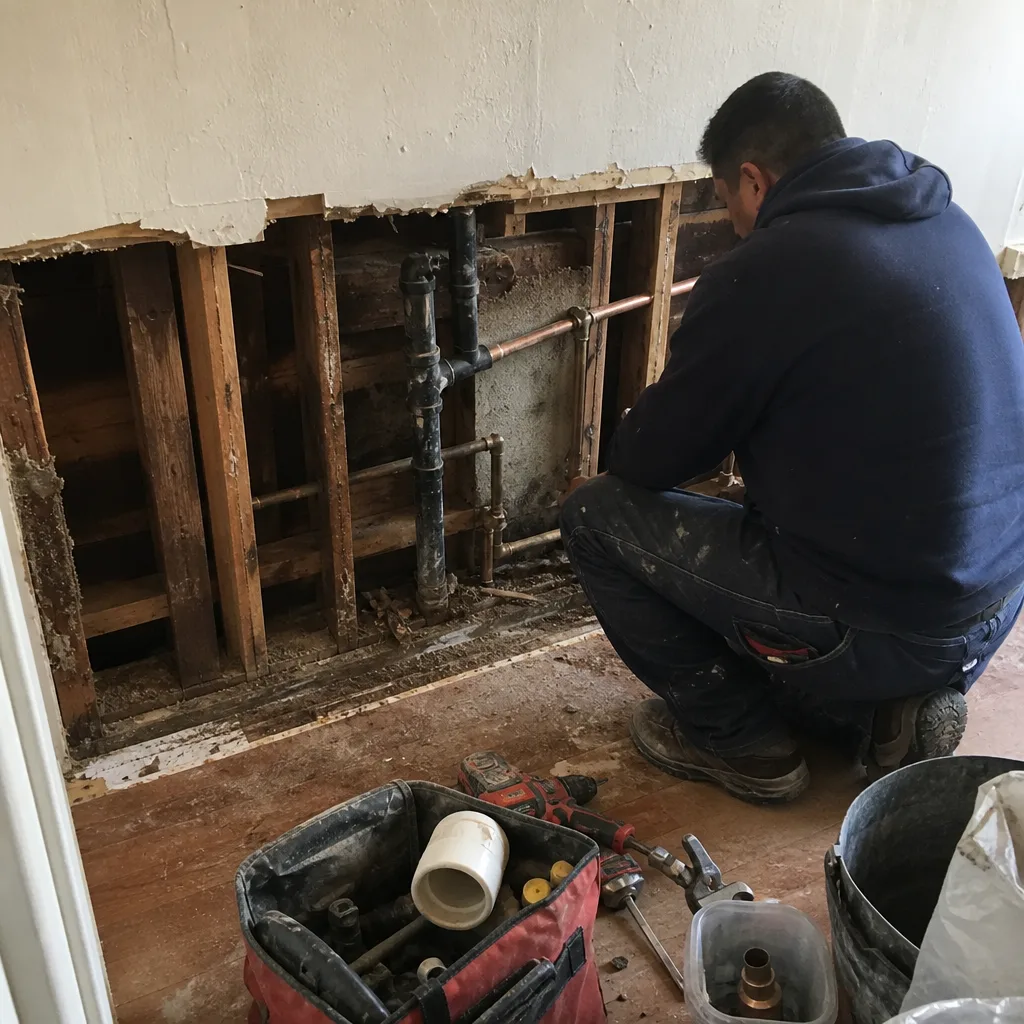 Before
 After
When to Call a Professional
Call a professional when you see more than one warning sign in the same zone of your house, when a warning sign recurs after a repair, when interior symptoms appear without an obvious exterior cause, or when you see any structural warning sign on a hillside lot. Foundation step cracks, retaining wall displacement, and visible roof flashing lift are not conditions to monitor and hope for the best. They’re conditions that get worse with every fog cycle and every rain event. Daly City Construction offers free estimates in Daly City. Call (866) 505-5254 to schedule a walkthrough and get a written line-item scope for any of the warning signs described in this guide.
Frequently Asked Questions
The most common warning sign we see in Daly City is lifted or corroded roof flashing, especially around chimneys and plumbing vents on west-facing roof slopes. The fog and wind-driven moisture work on flashing seals year-round, and small separations become significant water entry points over time. If you can see a gap between the flashing edge and the roof surface from the ground, schedule a roof inspection. Call (866) 505-5254 for a free roof and flashing estimate.
A foundation crack is serious if it’s wider than 1/8 inch, if it’s horizontal or stair-stepped rather than vertical and hairline, or if it appears on the downhill side of a hillside home. These patterns indicate lateral soil pressure or structural movement, not normal curing shrinkage. On a Daly City hillside lot, any visible step cracking warrants a structural review by a professional. Contact us at (866) 505-5254 to discuss what you’re seeing.
We don’t recommend attempting roof flashing repairs yourself, because the work usually requires a ladder, roof access, and an understanding of how the flashing detail integrates with the roof underlayment. An improper flashing repair can leave the roof more vulnerable than it was before. Lifted flashing should be evaluated and repaired by a licensed roofing professional before the next wet season in Daly City.
Repair costs vary widely depending on the system and the extent of the damage. A flashing repair is typically a minor roofing job, while a foundation repair on a hillside lot is a major structural project. The only way to get an accurate number is with a site inspection. For a free estimate on any of the warning signs discussed in this guide, call Daly City Construction at (866) 505-5254.
Most step cracks and retaining wall displacements do not pose immediate collapse risk, but they do indicate progressive movement that will not stop on its own. The longer the condition persists, the more extensive and expensive the repair. If you see a foundation warning sign on a Daly City hillside, get a structural assessment before the next rainy season. Call (866) 505-5254 to arrange an inspection.
Yes. A general contractor with multi-trade scope can evaluate a moisture problem from the roof through the wall assembly to the foundation drainage in one inspection. This prevents the misdiagnosis loop where a roofer, plumber, and window installer each provide a different answer and the actual source remains unidentified. That diagnostic clarity is one of the main advantages of working with a full-scope Home Renovation in Daly City contractor rather than coordinating separate trade specialists.
The Bottom Line
Construction warning signs in Daly City homes share a common origin: moisture working against mid-century building assemblies that were never designed for this climate’s fog, wind, and hillside soil conditions. The signs appear in sequence, starting with exterior details like flashing lift and paint checking, moving through windows and doors, and eventually presenting as interior symptoms like ceiling stains and door binding. The sequence matters because the earlier you catch it, the cheaper and more contained the repair. The single most important decision you’ll make is who you call when you see the first sign. A contractor with multi-trade scope can diagnose across system boundaries. A single-trade specialist will diagnose within their trade. The difference in outcome is often the difference between a $500 flashing repair and a $15,000 wall rebuild. Pay attention to the signs. Call (866) 505-5254 to schedule a free walkthrough before the next fog season.
Written by the team at Daly City Construction, serving Daly City since 2013.