

Last updated October 31, 2026
 Home additions & ADU
 Kitchen remodeling
 Bathroom remodeling
 Roofing
 Windows & doors
 Driveway & pavers
 Fence
Free written scope consultation - allowances, timeline, and change-order rules on paper before a single trade is scheduled
Seasonal Construction Care for Daly City: Year-Round Homeowner’s Guide
If you’re planning an exterior project for Daly City’s “summer,” know that July averages more fog hours than April. The marine layer that rolls over the San Bruno Mountain gap keeps this city cool and damp well into what the rest of the Bay Area calls summer, which means your painting, roofing, or siding window is narrower than the calendar suggests and needs to be booked months ahead. This guide walks through Daly City’s actual seasonal patterns, not the national four-season template, so you can schedule renovation and maintenance work when materials cure properly and contractors have real availability. For more context, see our The Complete Guide to Construction in Daly City. We’ll cover the fall window, winter prep for hillside homes, post-rain inspection checklists, and the fencing and drainage details that this city’s constant moisture makes uniquely important.
Quick Answer
Seasonal construction care in Daly City means timing exterior work for the September-through-November dry window, inspecting drainage and retaining walls on hillside properties before winter storms, and addressing moisture damage immediately after the spring rain. For a deeper look at contractor selection, read The Complete General Contractor Guide for Daly City Homeowners. The city’s coastal climate eliminates freeze-thaw cycles found inland, but the persistent damp accelerates rot, corrosion, and coating failure in ways that require a different maintenance checklist than most Bay Area guides provide.
Styles & brands we work with
Table of Contents
- Daly City’s Real Weather Windows
- Fall Wrap-Up: The September-November Sweet Spot
- Rain Season Preparation for Hillside Hills
- Post-Rain Inspection: What Water Leaves Behind
- Fence and Gate Care in Frost-Free Damp Conditions
- Scheduling Multi-Trade Projects Around Permits
- Paint, Siding, and Roof Material Selection for Coastal Conditions
- Seasonal Considerations for ADU and Prefab Construction
Daly City’s Real Weather Windows
Daly City operates on a two-season calendar that doesn’t match the rest of the country. The wet season runs roughly November through March, and the fog season runs April through August. Between those sits a September-through-early-November stretch of reliably dry, moderately warm weather with predictable afternoon clearing. In our experience managing General Contractor in Daly City projects, this fall window is when smart homeowners schedule most exterior work.
The numbers tell the story. Daly City averages between 20 and 28 inches of rain annually, nearly all of it falling in a five-month window. But more importantly for construction, the city sees over 200 days per year of measurable fog or heavy marine layer. That fog delivers moisture in the form of condensation, which sits on surfaces for hours every morning. Materials don’t need rainfall to get wet here. They need dry afternoons and low ambient humidity to cure properly, and that combination only shows up consistently in the fall.
Summer fog also means surface temperatures stay too low for reliable paint adhesion and roof membrane sealing from June through August. A roof coating that needs a minimum 50-degree surface temperature and several hours of direct sun to cure correctly will struggle in July when the thermometer in the St. Francis Heights or Broadmoor neighborhoods might not crack 62 degrees until late afternoon. We’ve seen homeowners schedule re-roofing in August only to deal with extended cure times and water intrusion risk.
What the Weather Means for Each Material Type
- Exterior paint and stain: Needs 48 hours without fog condensation for proper adhesion. The fall window provides this. Spring and early summer mornings frequently leave surfaces damp until 10 a.m. or later.
- Roofing membranes and sealants: Modified bitumen and peel-and-stick underlayment require consistent surface temperatures above 50 degrees. August in the Westlake and Original Daly City neighborhoods can see morning fog linger until noon, cutting the thermal window short.
- Concrete and hardscape mortar: Cures best when relative humidity stays below 75 percent. The fall stretch is the only extended period when Daly City reliably meets that threshold.
- Caulk and exterior-grade adhesive: Failures double when applied to surfaces that have absorbed nighttime moisture. Morning application in spring or summer is asking for trouble, but fall afternoons are reliably dry.
The practical takeaway applies to every homeowner planning Home Remodeling in Daly City work: book exterior trades for fall and interior work for winter. This sequencing matters more in Daly City than it does in San Francisco or South San Francisco, because the geography here holds fog longer than either neighboring city.
Fall Wrap-Up: The September-November Sweet Spot
By the second week of September, the wind pattern that pushes the marine layer inland weakens enough that Daly City starts seeing regular afternoon clearing. Morning fog retreats by 9 or 10 a.m. instead of lingering until 1 p.m. This creates a daily work window of five to seven hours of genuine sun and stable temperature, which is exactly what exterior coatings, sealants, and roofing materials need to perform long-term.
The fall window isn’t just about materials. It’s about contractor scheduling. Every Bay Area remodeling company knows that fall is the reliable exterior season, which means fall bookings fill fast. Homeowners who call in September expecting immediate roof work or exterior painting often end up waiting until the following fall. We recommend planning exterior projects in late spring and locking in a firm start date for September or early October. Browse more guides & resources for additional planning tips.
Fall Maintenance Checklist
- Inspect roof surfaces and flashing. Years of fog and rain create moss and lichen growth on north-facing slopes that never get direct sun. Have rubberized flashing at vent penetrations and chimneys checked before the rain arrives.
- Clean and repair gutters and downspouts. The conifer trees common in the Serramonte and Southern Hills neighborhoods drop needles continuously from September through December. Clogged gutters on a fog-exposed home overflow quickly once the first real storm hits.
- Repaint exterior wood trim. If your home has wood fascia, window sills, or decking, fall is the only reliable window to recoat surfaces that have full summer drying behind them.
- Walk the perimeter and reseal gaps. Look for cracks in exterior caulk around window frames, door thresholds, and utility penetrations. Moisture that works its way behind siding in rainy months causes rot that stays hidden until spring.
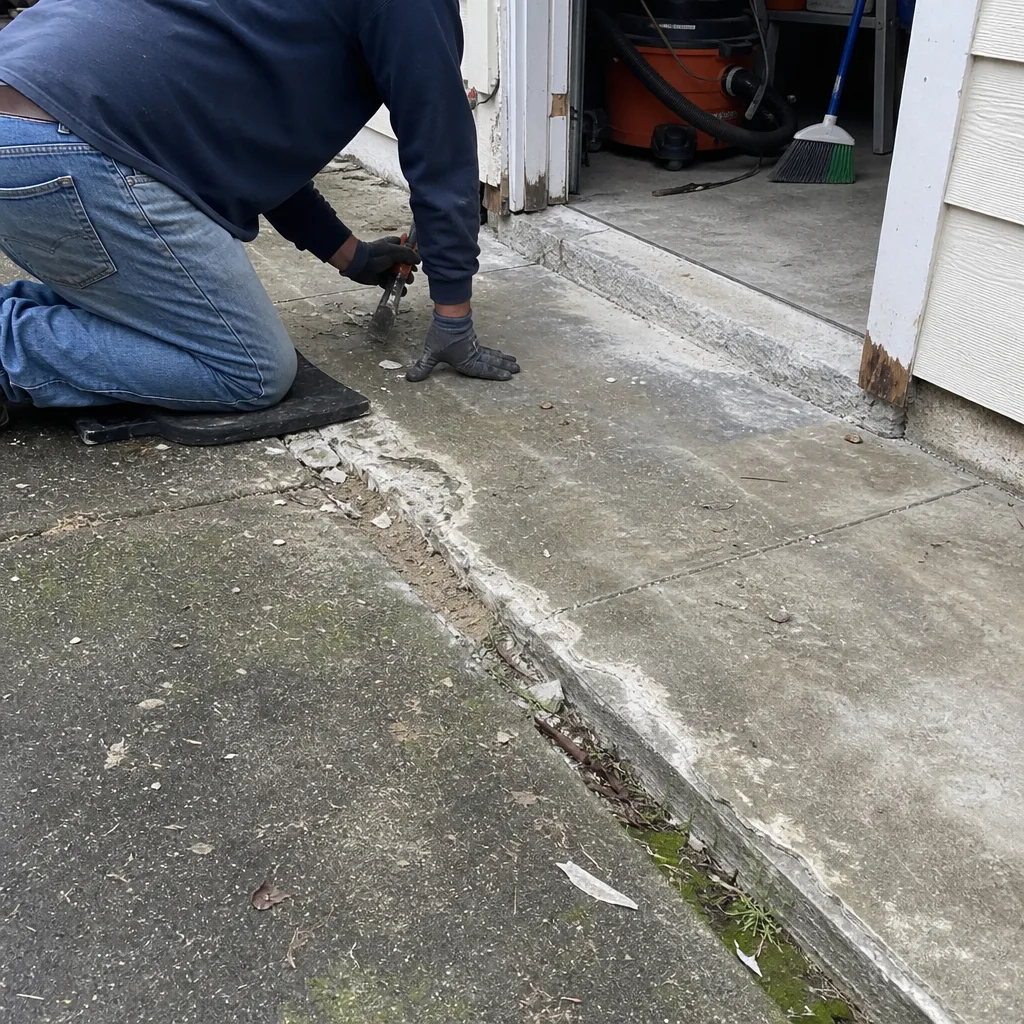
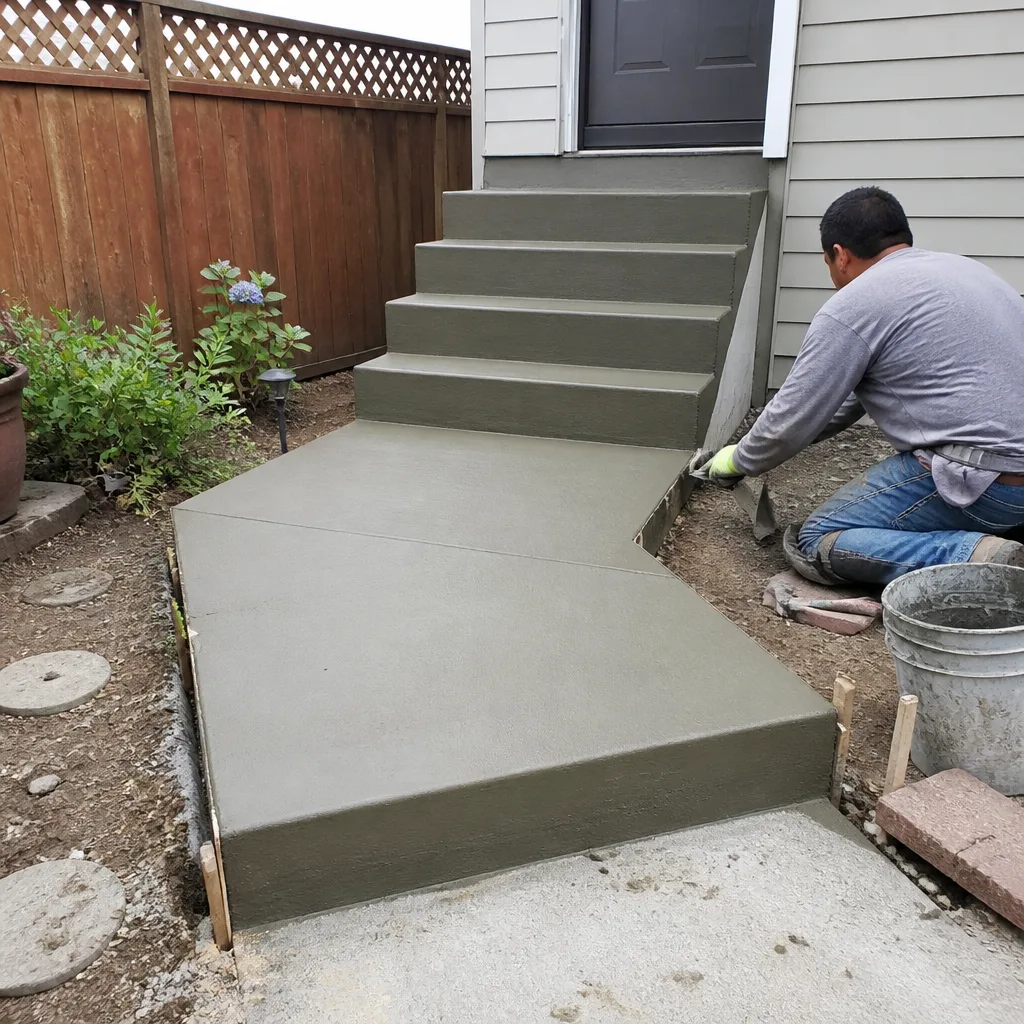
- Schedule hardscape settles and repairs. Settled pavers, cracked walkway joints, and leaning retaining caps all deteriorate faster once rain saturates the soil. Fall is the right time for hardscape repair because the repair bedding cures without rain interruption.
When we handle exterior wrap-up work before the rain season starts, we typically recommend products engineered for coastal moisture rather than standard-grade exterior paints and caulks. Silicone-hybrid sealants hold up better in Daly City’s damp environment than pure acrylic or polyurethane, particularly along the exposed western edge of the city where wind-driven rain is a constant.
Rain Season Preparation for Hillside Hills
Daly City is built on hills, and those hills move. The combination of expansive clay soils, steep slopes, and concentrated winter rainfall creates drainage issues that homeowners in flatter Peninsula communities never think about. Homes in the Hillside, St. Francis Heights, and parts of Broadmoor sit on slopes exceeding 15 percent, and that grade directs water in ways that can compromise foundations, retaining walls, and downhill neighbor properties.
The most important maintenance task for any hillside Daly City home is confirming that water flows away from the structure during the first heavy storm of the season. We recommend walking the property during actual rainfall, not just looking at it on a dry afternoon. A downspout that appears correctly routed on a sunny day might pool three feet from the foundation when water volume increases tenfold during an atmospheric river event.
Hillside Drainage Checklist
- Downspout extensions must discharge a minimum of 6 feet from foundation walls. On a downhill slope, even 6 feet may be inadequate. Downhill side downspouts often need 10-foot extensions or splash blocks that continue routing water away from the soil directly abutting the foundation.
- Retaining walls need visual inspection before winter, not after. Look for bulging, cracking cap joints, or soil erosion behind the wall. Once rain saturates backfill, a wall that was borderline in October can fail in January.
- Exterior stair and walkway drains need clearing. Leaves, pine needles, and loose soil clog surface drains quickly. A blocked drain on a hillside stairway routes water under the stairs where it erodes slope soil.
- Check grading along the uphill property line. Water from uphill neighbors flows onto your property in Daly City. If the seasonal drainage path between homes has eroded, regrade it before November. French drains installed in December cost more and often can’t be completed until spring.
For hillside properties with concrete retaining walls, surface drainage is only half the story. The backside of the wall needs functioning weep holes or a drainage system to relieve hydrostatic pressure. If the wall is over 4 feet tall or shows any movement signs, have a contractor assess it before the rain season. A failed retaining wall is a structural repair that should never be deferred through a wet winter.
Post-Rain Inspection: What Water Leaves Behind
Once the last spring storm passes in March or April, Daly City’s sustained moisture reveals damage that wet weather hid all winter. The freeze-thaw spalling common in colder climates is rare here, but that doesn’t mean exteriors emerge from winter unscathed. Water intrusion in Daly City works differently: it seeps, saturates, and rots without ever freezing.
The first dry weekend in April or May is the right time for a comprehensive exterior inspection. Walk the house with a flashlight and look for these specific signs:
- Caulk failure at window and door perimeters. Look for hairline cracks, shrinkage gaps, or caulk that has pulled away from one surface. Water that sat behind failed caulk for three months leaves mineral staining on the interior wall.
- Flashing rust or displacement at roof intersections. The rain exposes weak points along chimneys, dormers, and rooflines. When we inspect post-winter, we pay particular attention to step flashing on the uphill side of chimneys.
- Wood trim swelling or paint blistering. These are the first signs of moisture absorbed into wood fibers. The bottom 6 inches of door trim and the lower edges of fascia boards are most prone.
- Deck surface softness or joint separation. Fog-soaked decks that never fully dry develop rot at post bases and joist connections. In Daly City, deck framing often shows issues before the surface boards do.
- Moss regrowth on north-facing surfaces. Moss that’s removed in fall returns by spring if the surface is shaded. But moss on siding, not just stepping stones, means moisture is lingering on that wall. It warrants a closer look at underlying materials.
The best candidates for post-rain repair are always the ones you can verify directly. If you see moisture staining inside, on ceilings or around windows, the exterior source is already active and needs repair before the next fall. Home Renovation in Daly City projects that start with a water intrusion problem should always resolve that issue as a separate scope before any cosmetic work begins.
Fence and Gate Care in Frost-Free Damp Conditions
Daly City’s climate eliminates the expansion and contraction cycles that crack fence boards in colder regions, but it introduces a bigger problem: continuous moisture means posts rot and hardware corrodes at an accelerated rate. The classic redwood or pressure-treated pine fence that lasts 20 years in Sacramento will often show post failure by year 12 in Daly City’s fog belt, especially on east-facing property lines that never see afternoon sun.
The failure pattern is predictable. Post bases sit in soil that remains damp from November through May. The moisture wicks up through the end grain, creating ideal conditions for rot fungi. By the time a fence post wobbles visibly, the rot has typically advanced 6 to 8 inches below grade. This is why many Daly City fences lean after wet winters even when the visible boards look fine.
Fence and Gate Maintenance Schedule
- Each spring, check every post base. Scrape soil away 2 inches at ground level and probe with a screwdriver. If the wood is soft, the post needs replacement. Do this before the dry season so the repair can cure properly.
- Replace standard galvanized hardware with stainless or coated options. The fog carries salt from the Pacific, and galvanized hinges, latches, and bolts corrode quickly when they never dry completely. Stainless hardware costs more upfront but eliminates failures down the line.
- Seal fence boards with a penetrating stain rather than a film-forming paint. Film-forming paint traps moisture inside wood that never fully dries, leading to peeling and hidden rot. Penetrating stains let the wood breathe while protecting the surface.
- Maintain a 1 to 2-inch gap at the bottom of fence pickets. Boards in direct soil contact pull moisture continuously. If your fence was built tight to grade, consider trimming the bottoms or adding a gravel drip line below the fence.
Gates suffer the most in Daly City’s damp conditions because they carry live load on hinges that corrode. A sagging gate on a fog-exposed property usually has failing hinge screws into rotted wood, not just a simple alignment issue. When we replace door hardware on properties near the Pacifica border, we consistently see gate problems that homeowners deferred for years because the gate still opened, just not well. The repair scopes are always larger by the time the gate stops latching.
Scheduling Multi-Trade Projects Around Permits
One of the least-discussed realities of home renovation in Daly City is how permit processing times interact with the weather. The city’s building department volume peaks in spring and early summer, exactly the time when fog makes exterior work unreliable. Homeowners who want exterior scopes done in the fall need to start the permit process in late spring or early summer.
The sequencing matters most for projects that combine interior and exterior phases. For example, a whole-home renovation that includes a roof replacement, new windows, a kitchen remodel, and a rear hardscape project requires multiple permit applications that move through different review paths. The roofing and hardscape permits can typically process faster than a complex kitchen remodel with structural changes, but all permits move slowly during the busy spring season.
In our experience managing Daly City Construction home renovation scopes across trade lines, the most frustrating scheduling problem is not materials or weather, but permit timing. When a homeowner waits until August to apply for a roof permit expecting a fall install, they often discover the permit review queue has already pushed their start date into November. Fall rain then delays the project further.
Recommended Permit Timeline for Exterior Work
- April to May: Decide scope, get contractor bids, select materials. Lock in product selection before permit application.
- June: Submit permit applications. Any exterior project requested after June realistically faces fall fog rather than fall sun for the installation window.
- July to August: Permit review, plan checks, and material procurement. This is the right time to order custom windows, doors, and any roofing material with a longer lead time.
- September to October: Execute exterior installation. This is the only reliable window for paint, membranes, and hardscape mortar in Daly City.
- November to March: Complete interior phases. Interior work doesn’t care about fog or rain, and rainy-season scheduling keeps skilled trades busy.
Paint, Siding, and Roof Material Selection for Coastal Conditions
Material selection in Daly City can’t follow Bay Area norms. Products that perform well in San Jose or Pleasanton, where afternoons are hot and dry, fail quickly in the fog belt. This applies especially to exterior paint, siding, and roofing choices. We’ve seen homeowners choose products based on marketing claims or online reviews without accounting for the persistent condensation that defines Daly City weather, and the result is always a shortened service life.
For exterior paint, the best choices are specifically formulated for coastal and high-humidity environments. These paints cure at lower temperatures and form a film that resists moisture intrusion at the molecular level. Exterior acrylics labeled “weather-resistant” but not “high-humidity” fail prematurely in Daly City because morning fog saturates the film before it fully cures. Look for paints that specify cure times on damp surfaces and that recommend application in humidity below 80 percent.
Siding presents a similar calculation. Wood siding, however appealing, sits in constant moisture nine months of the year in Daly City. Even with perfect installation and sealing, wood exterior surfaces need recoating every three to five years, which adds an ongoing maintenance commitment that many homeowners underestimate. Fiber cement siding from brands like James Hardie performs considerably better in fog-exposed locations because the material doesn’t decay, doesn’t absorb water the way wood does, and holds paint well once installed. For Daly City homes, we frequently recommend fiber cement over wood trim and siding on exterior walls that face the prevailing fog pattern from the west.
Roofing decisions follow a similar logic. Shingle roofs that carry sufficient warranty protection in most of California can struggle here because the continuous moisture encourages algae growth and shortens asphalt shingle life. Premium asphalt shingle lines from manufacturers like GAF, CertainTeed, and Owens Corning all carry algae-resistance warranties that specifically address the moss and streak problems common in Daly City. Composite and metal options from Boral and other manufacturers perform well too, though they command a different price point. The key calculation for homeowners is not which roof costs least installed, but which roof lasts longest in moist coastal air without demanding frequent moss treatment. For help evaluating brands, see Choosing the Right Construction Brand: A Buyer’s Guide for Daly City.
Material Selection Guidelines for Fog and Damp Conditions
- Exterior paint: Choose high-humidity or coastal formulations. Accept higher per-gallon cost for a paint that survives the moisture cycle. The cheap option repaint every two years costs more than a premium paint that survives five.
- Siding and trim: Fiber cement outperforms wood. If wood is required for architectural character, use vertical-grain heartwood (cedar or redwood) rather than flat-grain board.
- Roofing: Look for algae-resistant shingle blends regardless of brand. Algae resistance isn’t a cosmetic feature in Daly City; it’s a structural one.
- Flashing and fasteners: Use stainless or copper. Standard galvanized flashing corrodes in salt-laden fog air faster than most homeowners expect.
- Deck materials: Pressure-treated framing with hidden flashings at every connection. The deck surface can be composite, hardwood, or treated wood, but the structural frame is what determines how long the deck survives.
We keep a portfolio of brands that range from premium to value tier in every category, including PGT windows and CGI doors for the highest-end exterior openings. That’s not about having a catalog. It’s about matching the homeowner’s actual budget and the project’s real exposure condition without compromise. In Daly City, the exposure condition is wetter than most people realize, and the product choice has to reflect that.
Seasonal Considerations for ADU and Prefab Construction
ADU construction follows a different calendar than exterior restoration work. Because most ADU projects begin with site preparation – grading, foundation work, utility trenching – the wet season creates genuinely disruptive conditions in Daly City that home additions on flat lots in San Jose don’t face. The soil on many Daly City hillside lots is expansive clay that becomes unstable when saturated, and trenching or foundation excavation during rain can cause erosion and foundation settlement problems.
The right timing for an ADU project depends on whether the structure is site-built or prefabricated. Site-built ADUs work best when foundation and site work happens in late spring or early fall, with framing and enclosing progressing through any weather. Prefab ADUs, where the structure arrives as complete modules, require more precise coordination but reduce on-site construction time significantly. We work with brands like Abodu, Dvele, and Mighty Buildings, and the modular approach means a Daly City homeowner can pour the pad in late September and have the module set before Thanksgiving, weather permitting.
Prefab construction also changes the weather equation in another way: the building shell arrives sealed and watertight, which means interior finish work can proceed through the winter without weather delay. A conventional ADU that’s mid-framing in December faces rain exposure on every horizontal surface until the roof is on. The prefab route eliminates that concern because the factory handles the weather-exposed phases.
Regardless of construction approach, any ADU project in Daly City should include a drainage plan that accounts for the impact of the new structure on existing site drainage. Hillside lots absorb water in specific patterns, and adding an ADU changes those patterns. We design and install hardscape and drainage systems that route water around and away from both structures. This is the kind of site-level detail that separates projects that hold up through multiple wet seasons from those that develop drainage problems within the first two years.
Common Mistakes to Avoid
- Scheduling exterior painting in July because the national calendars say “summer is painting season.” Daly City’s summer is fog season, and July surface temperatures frequently stay too low for proper paint film creation. The September-to-October window is the real painting season here.
- Deferring gutter cleaning until winter storm warnings arrive. In Daly City, pine needles and fog-fed moss pile up quickly. By the time you hear a storm warning, the gutters are already overflowing, and the damage has started.
- Replacing roof shingles without checking the underlying decking and flashing. In a damp climate, the decking is where rot hides. New shingles over rotted sheathing means a roof that fails structurally within a few years.
- Using interior-grade caulk on exterior surfaces. This one shows up constantly in Daly City homes where previous handymen cut corners. Interior caulk shrinks and cracks after one fog season. Exterior-grade silicone or polyurethane sealants are required for anything exposed to moisture.
- Ignoring small retaining wall cracking because “it’s been like that for years.” In hillside Daly City neighborhoods, a crack that stays stable through dry years can become a structural failure in one wet winter. Small cracks become large problems when saturated soil doubles the pressure behind the wall.
- Assuming a fence will last as long in Daly City as it would in a drier climate. The fog cuts fence post life by 30 to 40 percent. Budgeting for post replacement every 12 to 15 years is realistic here.
- Basing material choices on what worked at a previous home in a different city. Daly City’s microclimate is genuinely different from even San Francisco, just 8 miles north. A product that worked in a drier town will fail prematurely here if it’s not rated for coastal moisture.
See the difference
 Before
 After
 Before
 After
 Before
 After
When to Call a Professional
Most seasonal maintenance in Daly City can be handled by a diligent homeowner, but some scopes require a professional contractor. If you see foundation wall cracking, retaining wall movement, roof deck rotting, or drainage problems that reroute water toward the structure, do not delay. The cost of professional assessment is always lower than the cost of structural repair after months or years of continued deterioration.
Daly City Construction offers free estimates in Daly City. Call (866) 505-5254 to get a professional evaluation of any seasonal maintenance issue before it becomes a major repair. We’re licensed and insured, and we handle everything from roof inspection to full multi-trade renovation scopes.
Frequently Asked Questions
The best time to paint a house in Daly City is September through early October, when the marine layer retreats, afternoon temperatures climb into the mid-60s or low 70s, and relative humidity drops below 75 percent. This window provides the consistent dry conditions paint needs for proper adhesion and film curing. Call (866) 505-5254 for a free exterior painting estimate.
Gutter cleaning in Daly City should happen twice per year: once in early fall before the rain arrives and once in late winter after the heaviest storm period. The fog-fed moss and continuous needle drop from conifer trees create clog conditions faster than in drier Bay Area communities. If your gutters overflow during a storm, the overflow typically runs toward the foundation before you notice the problem.
Inspect retaining walls in Daly City twice per year: in early fall before the rain season starts and again in spring after the last storm has drained. Hillside properties on expansive clay soils experience significantly more wall movement from seasonal moisture changes than homes on flat lots. Any new cracking, bulging, or cap displacement should be evaluated by a professional before the next wet period.
Fiber cement siding is worth the extra cost for most Daly City homes because the material resists moisture absorption, doesn’t feed rot fungi, and keeps exterior paint coatings longer. In a climate where fog delivers 200-plus days of moisture per year, wood siding needs recoating every three to five years and replacement far sooner than fiber cement. The initial cost premium is recovered through lower maintenance and longer service life.
Schedule roof repair in Daly City for September through October, the city’s only reliable dry window. Summer fog keeps roof surfaces too cool and damp for proper sealant and membrane adhesion, and winter rain makes roof replacement genuinely unsafe. If your roof needs work and the fall window is approaching, book early. Contractors throughout the Bay Area reserve their fall schedules months in advance.
To prevent fence post rot in Daly City, use pressure-treated posts rated for ground contact (UC4A or UC4B treatment level), seat each post in gravel rather than soil, and ensure the top of the concrete footer slopes away to drain water. Posts should be replaced when the wood at grade level begins to soften, which in this climate means every 12 to 15 years regardless of surface appearance. Stainless hardware and a 1-inch gap at picket bottoms also extend fence life significantly.
The Bottom Line
Daly City homeowners face a climate that demands different timing than the standard seasonal maintenance calendar. The real workable windows are fall for exterior projects and winter for interior scopes. Every decision, from when to book a roofer to what fence post treatment gets specified, should account for the fog and moisture that define this city. The homeowners who understand this early avoid costly rework and extended project delays. The ones who schedule by the national seasonal playbook end up repainting sooner, replacing fences earlier, and paying for roof repairs that could have been prevented. Plan around Daly City’s actual weather, inspect before and after every rain season, and choose materials engineered for coastal damp. The result is a home that stays dry, sound, and structurally stable through every atmospheric river the Pacific sends this way.
Written by the team at Daly City Construction, serving Daly City since 2013.